

The rapid adoption of generative artificial intelligence has fundamentally altered the landscape of digital content creation. What once required hours of specialized technical execution can now be rendered in seconds through a simple text prompt. Marketers, content creators, and businesses can instantly generate logos, social media graphics, and digital illustrations at virtually no cost.
However, this unprecedented accessibility has introduced a widespread quality control problem across digital channels. Online feeds are increasingly flooded with generic, hyper-polished imagery that exhibits obvious hallmarks of automated generation—awkward spatial compositions, inconsistent brand geometry, and a distinct lack of strategic intent.
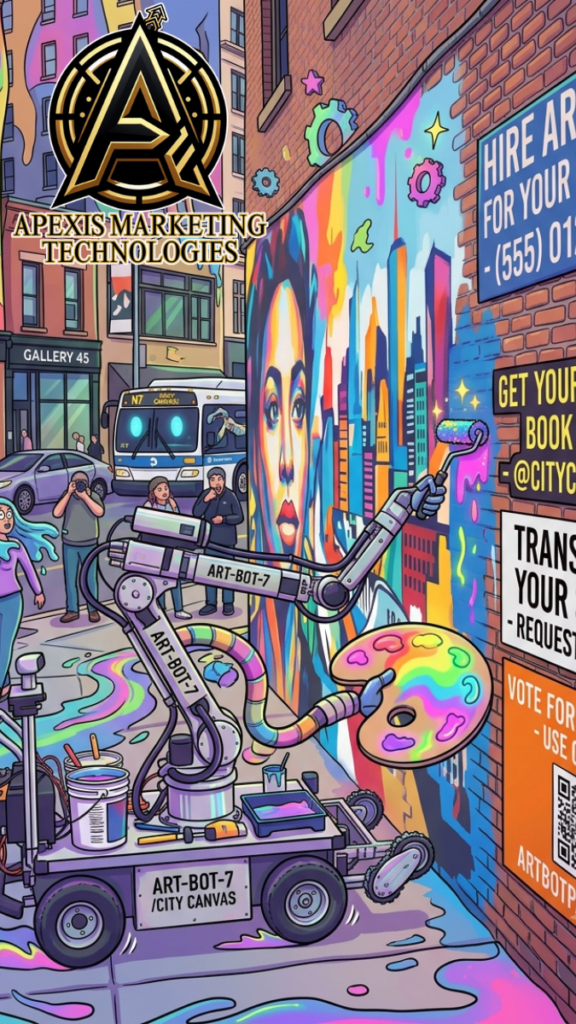
Much like the introduction of desktop publishing and digital image editing software decades ago, access to powerful creation tools does not inherently confer design expertise. Generative AI excels at accelerating production workflows and expanding initial visual options, but producing high-impact, authentic, and brand-aligned assets still depends on foundational design judgment and strategic human direction.
To effectively leverage generative AI without compromising visual quality or brand integrity, organizations and creators must apply three core operational principles.
1. Establish Clear Boundaries Between AI Generation and Specialized Design Software
A common operational misstep in AI-assisted workflows is expecting a single generative platform to execute an entire visual project from initial concept to final branded deliverable. While generative models are exceptionally effective at rapid ideation and generating foundational artwork, they lack the deterministic precision required to maintain exact brand standards.
Generative image models process inputs probabilistically, which inherently causes fine details—such as vector logo geometry, exact typography placement, and brand color consistency—to drift and distort across multiple iterations. Even large language models configured to assist with graphic generation frequently recommend offloading brand placement and structural formatting to dedicated design platforms like Adobe Photoshop or Canva.
Achieving a professional result requires a hybrid workflow:
- Generative AI should be utilized for initial concept generation, background assets, and rapid visual prototyping.
- Traditional Design Tools must be used for layout assembly, typography control, exact brand asset integration, and final asset formatting.
By maintaining human oversight at the assembly stage, creators ensure that speed does not come at the expense of brand precision.
2. Master Precision in Articulating Visual Concepts
The quality of AI-generated visual output is directly tied to the clarity of the underlying text prompt. For many creators, the primary bottleneck in the generative process is not software operation, but the challenge of translating abstract mental concepts into precise, descriptive language.
If an operator cannot explicitly articulate parameters such as lighting, composition, medium, spatial orientation, and style, the AI platform will rely on default training patterns—resulting in the generic, highly recognizable aesthetic typical of low-effort AI graphics.
To overcome prompt construction barriers, creators can leverage conversational large language models (LLMs) as preliminary strategic tools:
- Prompt Optimization: Conversational AI models can translate rough, high-level ideas into structured, highly detailed prompts optimized for specific image generation algorithms.
- Ideation and Conceptual Framing: When starting without a clear direction, text models can generate diverse visual concepts, unexpected stylistic angles, and detailed composition plans to serve as structured starting points.
3. Distinguish Between Tool Mechanics and Foundational Design Principles
Prompt engineering and platform navigation are technical mechanics; visual design is a strategic discipline. While generative software can instantly assemble pixels based on textual keywords, it possesses no intrinsic understanding of fundamental design theory.
Effective visual communication relies on core principles that software cannot evaluate autonomously:
- Visual Hierarchy: Directing the viewer’s eye to key information in order of importance.
- Spatial Relationships and Balance: Managing negative space and element distribution to prevent visual clutter.
- Color Theory and Contrast: Utilizing color deliberately to evoke specific psychological responses and ensure readability.
- Audience Alignment: Tailoring visual tones to resonate with specific demographics and market segments.
Generative AI reduces technical friction and removes execution barriers, but it cannot evaluate whether a design effectively communicates its intended message.
Conclusion: The Evolving Role of the Modern Designer
As generative tools continue to advance, the creators and organizations that achieve the strongest market differentiation will not be those that rely entirely on end-to-end automation. Instead, competitive advantage will belong to those who successfully integrate AI speed with human creative direction, strategic thinking, and a disciplined application of core design principles. AI is a powerful assistant within a broader creative strategy, but authentic visual communication remains a human endeavor.
Leave a Reply